
Diabetes is an endocrine disease where your body cannot regulate its own sugar levels. Your eyes are one of the organs affected by diabetes. If your eyes are affected, it is called diabetic retinopathy and this is potentially blinding. Diabetic retinopathy is caused by damage to the capillary blood vessels of the retina. For this reason, it is important to regularly undergo a thorough eye examination by an ophthalmologist.
This condition is very common in people who have had diabetes for five years or longer.
At this stage the blood vessels in the retina are only mildly affected.
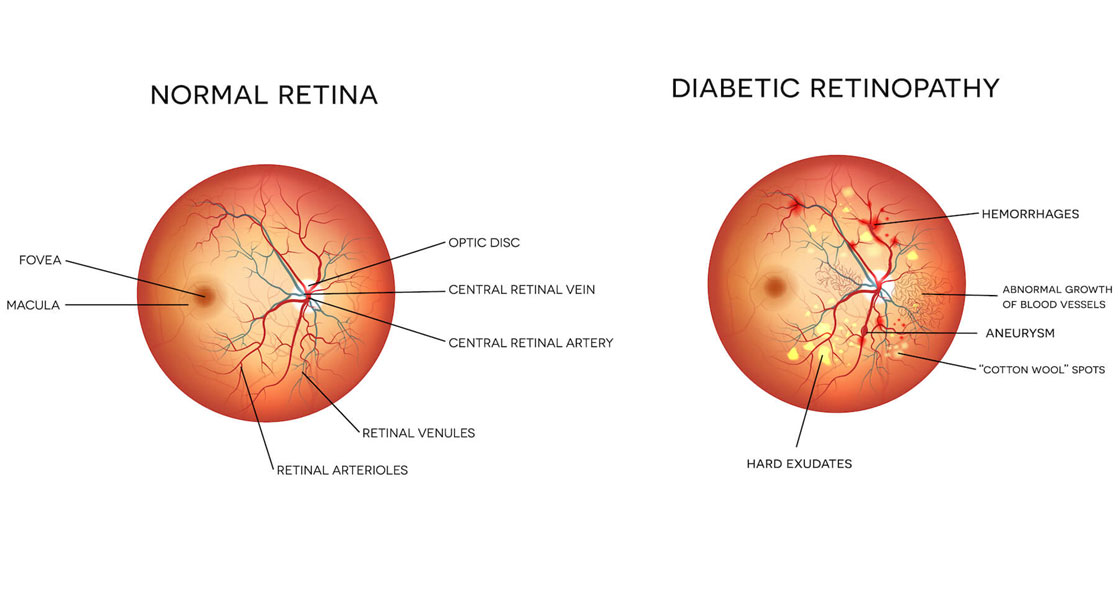
The blood vessels may leak or block off in areas of the retina.
There may be areas of swelling and hemorrhage.
Your vision may still be normal at this stage depending on the area of the retina that is affected.
This refers to swelling or hemorrhage in the macula of the retina.
You may notice a decrease or distortion in your central vision.
Retinopathy progresses over time to a more serious stage where the blood vessels are so damaged that they close off.
In response, new blood vessels start growing on the retina.
These new vessels are weak and can bleed into the cavity of the eye.
The new blood vessels grow into the vitreous gel from the surface of the retina.
Following this, scar tissue starts growing into this cavity too.
Then the scar tissue shrinks and pulls the retina out of place (tractional retinal detachment).
All patients with type 1 or type 2 diabetes are at risk. It is therefore imperative that everyone with diabetes should undergo a comprehensive dilated eye examination at least once a year. If you present signs of retinopathy, your ophthalmologist will recommend treatment to help prevent progression.
Early in the course of the disease there may be several small blind spots in the field of vision. Blurred vision may occur when the macula swells from leaking fluid or blood. Proliferative retinopathy with traction retinal detachment causes distortion and severe loss of vision. Although your vision may be good, changes can be taking place in your retina that needs treatment.
Because most sight loss due to diabetes is preventable, remember:
Treatment for diabetic retinopathy can be laser treatment, intraocular injections, surgery or a combination of these. Treatment may become necessary even though your vision is good.
In non-proliferative retinopathy, areas of swelling or blocked blood flow are detected with special tests (Fluorescein Angiogram & OCT).
Laser treatment seals the leaks in the blood vessels. The retina can then clear up the fluid or blood.
Proliferative retinopathy is treated with surgery.
The vitreous gel is removed from the eye along with any blood and scar tissue that can cause traction on the retina.
Laser treatment is also performed.
The vitreous gel is replaced with gas or silicone oil.
The choice of gas or silicone oil depends on the severity of the disease.
Strict control of your diabetes significantly reduces sight threatening complications.