

Surgery Procedures

Cataract

Cataract surgery, which is also called lens replacement surgery, is the removal of the natural lens of the human eye that has developed a cataract, an opaque or cloudy area. The eye's natural lens is usually replaced with an artificial intraocular lens. Over time, metabolic changes of the crystalline lens fibres lead to the development of a cataract, causing impairment or loss of vision.
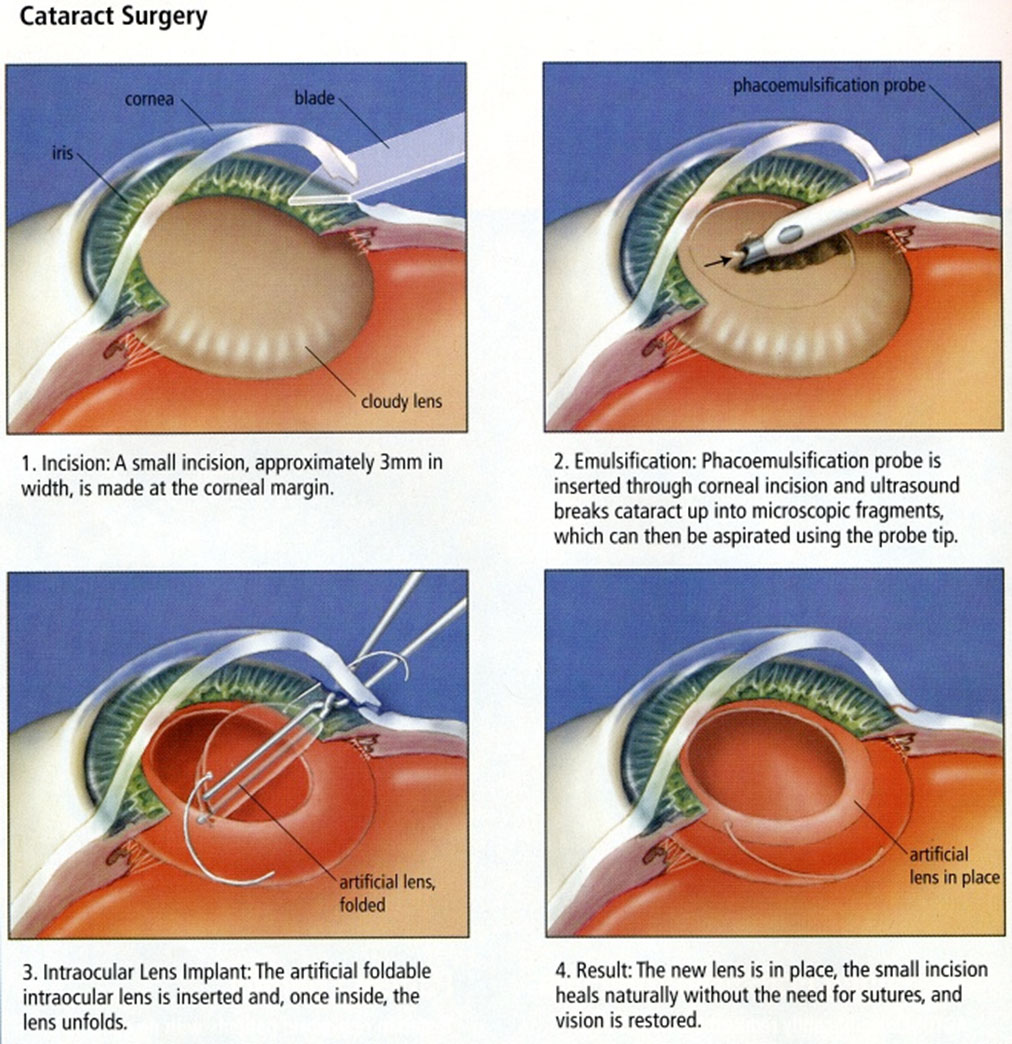
What to expect from cataract surgery:

Before the procedure:

  • A full eye examination will be performed to exclude any other pathology
  • Your eye will be measured to determine the proper power of the intraocular lens to be placed in your eye
  • The different options of intraocular lens (IOL) will be discussed with you
  • The continuation of your usual medications before surgery should be discussed
  • Arrangements should be made to have someone drive you home after surgery
  • A day should be set aside for this procedure and no activities after the procedure should be planned

The day of surgery:

  • You can have a light breakfast, especially if you need to take your chronic medication
  • Before surgery you will be given eye drops and you may also be given a mild sedative
  • Local anaesthetic eye drops will numb your eye
  • You will be awake during the procedure, but you will be mildly sedated
  • The actual removal procedure will take approximately 20 - 30 minutes

After the surgery:

  • After surgery an eye shield will be taped over your eye
  • You can go home (the same day of surgery)
  • A post operative examination will be performed the next day

After care:

  • Use the eye drops as prescribed
  • Be careful not to rub or press on your eye
  • Avoid strenuous activities for two weeks
  • You may begin driving within a few days

Contact our office immediately if you notice if:

  • Your vision becomes worse
  • Your eye becomes more painful
  • Your eye becomes more red