
Glaucoma refers to a group of conditions that result in damage of the optic nerve. There are different types of glaucoma, the problem in most types is intraocular pressure that is too high. The pressure increases because the outflow channels of fluid out of the eye become blocked. This causes damage to the optic nerve that is irreversible and can result in blindness if left untreated.
Glaucoma is one of the leading causes of preventable blindness. Most forms of glaucoma do not produce symptoms until vision is already severely damaged. If diagnosed early, the disease can be controlled and vision loss can be prevented.
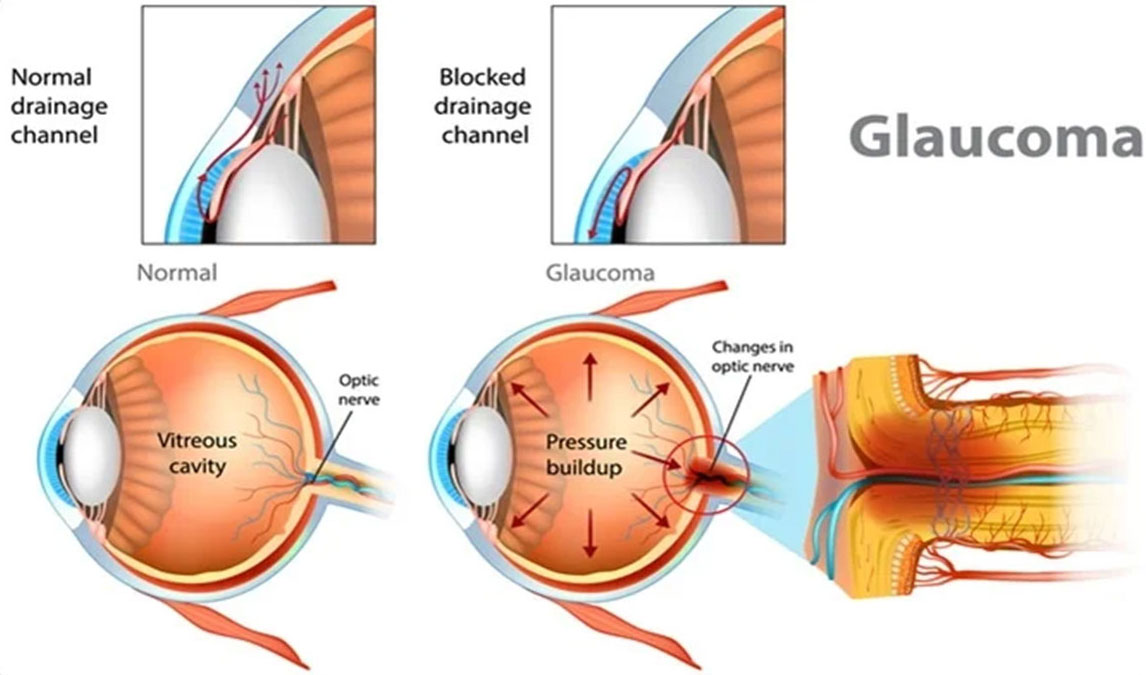
This is the most common form of glaucoma. In this type of glaucoma there is resistance to the outflow of fluid from the eye.
Causes:
This is a rare form of the disease accounting for just 15% of all glaucoma cases. This form of glaucoma can be chronic or acute.
Causes:
Causes:
Causes:
Secondary glaucoma is usually associated with previous eye injury, intraocular inflammation, previous eye surgery or certain medications.
Open angle glaucoma is the most common form of glaucoma and initially presents with no symptoms. The pressure in the eye builds up gradually. At some point, the optic nerve is damaged and peripheral vision is lost. This happens quite late in the progression of the disease.
Without treatment, total blindness can occur. People with normal-tension glaucoma will not experience any symptoms until they begin to lose peripheral vision.
This is a rare form of the disease accounting for just 15% of all glaucoma cases. This form of glaucoma can be chronic or acute.
Acute closed-angle glaucoma is the result of a sudden blockage in the normal outflow of eye fluid (aqueous humor) from the eye. Symptoms may include severe pain, nausea, vomiting and blurred vision.
Chronic closed-angle glaucoma progresses more slowly and the symptoms are much more subtle, much like in open angle glaucoma.
Although glaucoma is most common in adults over the age of 40, susceptibility is not determined by age alone. There is a genetic component and those with a family history of the disease. Non-Caucasians are at increased risk. Hypertension and diabetes increase the risk of glaucoma.
Since early detection is critical to avoid permanent loss of vision, individuals who possess any of the non-age-related risk factors should have regular examinations by an ophthalmologist every one to two years.
Individuals in the general population should have a glaucoma evaluation every two to three years after the age of 40, and every one to two years after the age of 60.
Therapies may include: